Global Private Debt Report · 2026

Private Debt,
Reimagined for
High-Growth Companies

A Venture Debt & Growth Credit Lens — India, GCC, UK & Europe

The capital stack for growth is evolving. This report maps the credit strategies filling the gap between venture capital and traditional banking.

India
GCC
UK & Europe
Scroll
Global Overview

A New Era of Structured Capital
for Scaling Companies

Venture Debt & Growth Credit supports companies across stages with flexible capital, combining growth ambition with disciplined risk and structured financing.

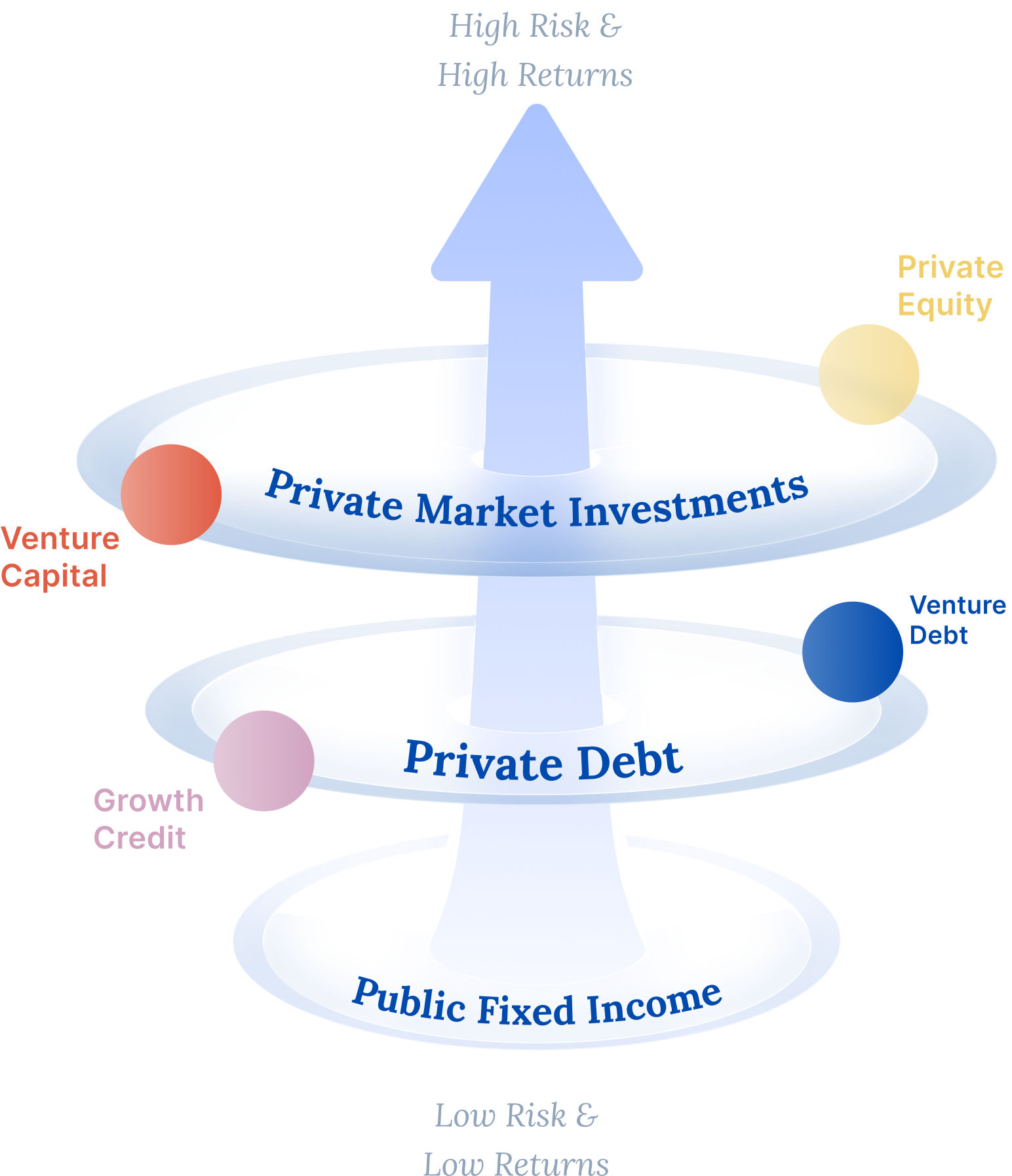
Private debt has evolved into a key pillar of modern financing, adapting to companies’ needs as they scale. Venture Debt supports earlier-stage, venture-backed businesses focused on growth, while Growth Credit enables larger, scaled companies, backed by institutional investors - to access capital with greater emphasis on stability and structured expansion. The Global Private Debt Report 2026: A Venture & Growth Credit Lens captures this shift across the maturity spectrum, highlighting how these segments together are shaping a more disciplined, multi-instrument approach to growth financing.

GCC Growth Credit ($3.89B in 2025) surpassing cumulative Venture Debt ($2.82B, 2018–2025)
Financial Evolution

Every wave of innovation creates
a financing gap. Then finance catches up.

Scroll to advance through history →

19th C. Mobility Dollar Era Digital Mkts Software AI & Climate
Industrial era
1
Mid–late 19th century
Industrial Energy &
Mechanised Production
What broke in legacy finance
  • Family & Merchants capital too small for large-scale fixed-asset industry
  • Rail infrastructure had no funding mechanism at scale
Financial Innovation Response
  • Joint-stock equity, public exchanges, underwriting syndicates mobilise industrial capital
  • Securities become widely held & professional capital allocators emerge
Mobility and infrastructure era
2
Late 19th to early 20th century
Mechanised Mobility &
Infrastructure
What broke in legacy finance
  • Single investors cannot fund mega-projects
  • Households lack liquidity for durable goods
Financial Innovation Response
  • Syndicated bonds, Project Finance, Ratings, Instalment credit pool infrastructure capital
  • Expansion of mass consumer finance
Globalised trade era
3
Post WWII to 1990s
Globalised Trade &
Dollar Finance
What broke in legacy finance
  • Domestic banking systems & capital controls cannot fund cross-border USD financing needs
Financial Innovation Response
  • Eurodollars, Eurobonds, Syndicated loans create offshore global credit markets and tradable sovereign risk
Electronic networks era
4
1970s to 2000s
Electronic Networks &
Digital Markets
What broke in legacy finance
  • Manual trading, settlement & information asymmetry constrain market speed and scale
Financial Innovation Response
  • Electronic exchanges, SWIFT, real-time data, Institutional VC accelerate global markets and finance the tech sector
Digital software economy era
5
2000s to 2010s
Digital &
Software Economy
What broke in legacy finance
  • Intangible assets & hypergrowth risk misfit bank collateral and cash-flow lending models (post-GFC retrenchment)
Financial Innovation Response
  • Venture capital scale-up
  • Venture debt, ARR-based lending, Growth equity fund software hyper growth and unicorn formations
AI and climate capital era
6
2010s to present
AI, Financial Access &
Climate Capital
What broke in legacy finance
  • Bank regulation (Dodd-Frank and Basel III) & legacy risk models can't fund innovation
  • SMEs or transition risk — capital intensity, growth speed + market uncertainty + innovation disruption increased
  • Firms stay private longer & need leverage for expansion & M&A
Financial Innovation Response
  • The private credit market has grown fivefold since the 2008 financial crisis
  • AI-led underwriting & venture debt and "growth credit" bridges bank debt
  • Equity + green finance expand innovation & climate funding markets
Risk Return Profile

Why Private Debt stands out in
Modern Portfolios

Venture Debt & Growth Credit combines higher yield potential with downside protection, offering structured exposure to growth companies across stages with disciplined risk-return dynamics.

1
Enhanced returns versus traditional fixed income

Venture Debt and Growth Credit deliver higher returns than public fixed income securities (Investment Grade like mutual funds and sovereign bonds etc.) reflecting underwriting of growth-stage businesses and equity-backed risk rather than static collateral.

2
Downside protection relative to equity

Both strategies are structured as senior ranking private debt instruments including senior secured and unitranche facilities offering contractual cash yields, priority in the capital structure, and governance protections that reduce loss severity relative to equity investments.

3
Differentiated risk profiles across stages

Venture Debt is typically underwritten to VC-backed companies with higher growth volatility, while Growth Credit benefits from stronger cash-flow visibility and private equity sponsorship, resulting in lower dispersion and more predictable outcomes.

Capital Stack
Capital Stack
The VD → GC Spectrum

Structures across
the full credit continuum.

Scroll to explore each structure →

Venture Debt
Venture Debt
VD to GC spectrum
Growth Credit
VC-backed · Dilution-avoidance
Runway & Equity Bridge
Runway & Equity Bridge Capital
  • Bridge between equity rounds without dilution
  • Fund operating losses during scale-up
  • Defer next equity raise by ~12–18 months
  • Preserve valuation timing while extending cash runway
Working Capital
Working Capital & Revenue-Linked Liquidity
  • Short-term working capital rollover for scaling businesses
  • Inventory and vendor-payable management across 30–180 day cycles
  • Order Book Discounting, liquidity against confirmed contracts, forward revenues, or receivables
  • Common in B2B, SaaS, marketplace, and distribution-led models
Growth Infrastructure
Growth Infrastructure & Credit Enablement
  • Asset-light CAPEX financing for tech infra, equipment, and tooling
  • Support growth investments alongside equity capital
  • Fund FLDG deposits / credit enhancements in fintech-bank partnerships
  • Enable new lending or operating capacity without balance-sheet stress
Hybrid · Transitional
Expansion CAPEX
Expansion CAPEX & Project-Linked Financing
  • Larger, longer-tenor CAPEX commitments than classic VD
  • Backed by project-linked or contracted cash flows, not pure growth underwriting
  • Common in infra-lite, industrial tech, cleantech, and scaled operating platforms
  • Marks the shift from equity-supported growth to cash-flow visibility
Selective Acquisition
Selective Acquisition & Inorganic Growth
  • Bolt-on acquisitions for late-stage VC- or PE-backed companies
  • Sponsor-supported but below full LBO / traditional buyout scale
  • Used to finance expansion without a full equity-funded transaction
  • Transitional use case between VD flexibility and GC discipline
Platform Lending
Platform & Onward Lending Structures
  • Fintech platforms lending to end borrowers or partner ecosystems
  • Initially underwritten to sponsor/platform quality and growth trajectory
  • Over time shifts toward pool-level, portfolio, or asset performance metrics
  • Often the bridge from venture-style credit to warehouse / structured finance
PE-backed · Balance-sheet scaling
Scaled Onward Lending
Scaled Onward Lending & Acquisition, Expansion
  • Buyouts, roll-ups, and sponsor-led expansion financing
  • Financing mature PE-backed or institutional-scale fintech loan books
  • Structured leverage with covenants, amortisation, and downside protections
  • Supports balance-sheet scaling, recapitalisation, and strategic expansion
Warehouse Facilities
Warehouse & On-Balance-Sheet Lending Facilities
  • Revolving facilities for mature fintech or specialty finance loan books
  • Borrowing-base structures with eligibility, concentration, and advance-rate rules
  • Underwritten to portfolio performance rather than platform growth alone
  • Typical for scaled PE-backed or institutional lending platforms
Asset-Backed
Asset-Backed & Structured Credit Solutions
  • Financing against receivables, equipment, real estate, or other hard assets
  • Includes warehouse finance, ABS-style formats, and structured liquidity solutions
  • Large-ticket, longer-duration facilities with stronger collateral support
  • Used to unlock liquidity without equity dilution while scaling efficiently
Growth Credit
Where the Market Is

Three regions.
Three distinct stories.

"A scaling venture-driven ecosystem with private debt (VD+ GC) emerging as core growth capital."

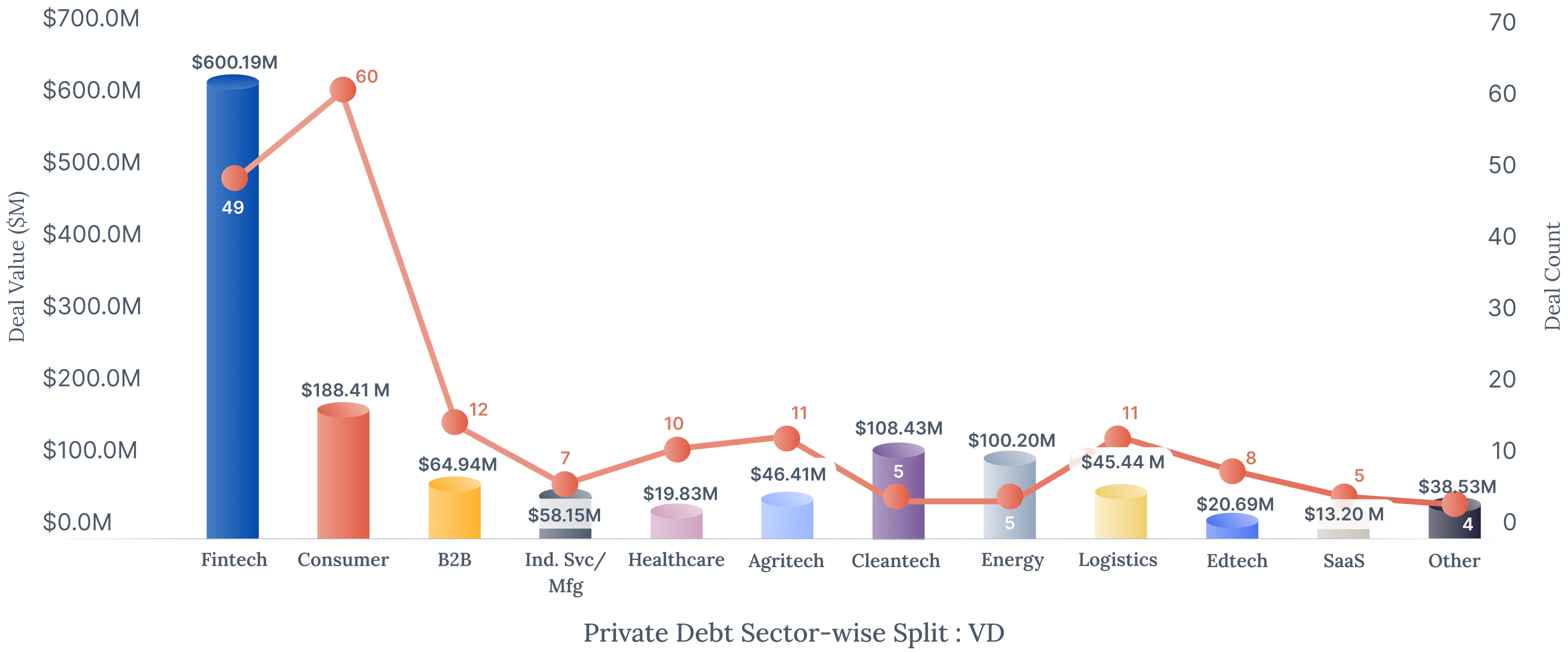
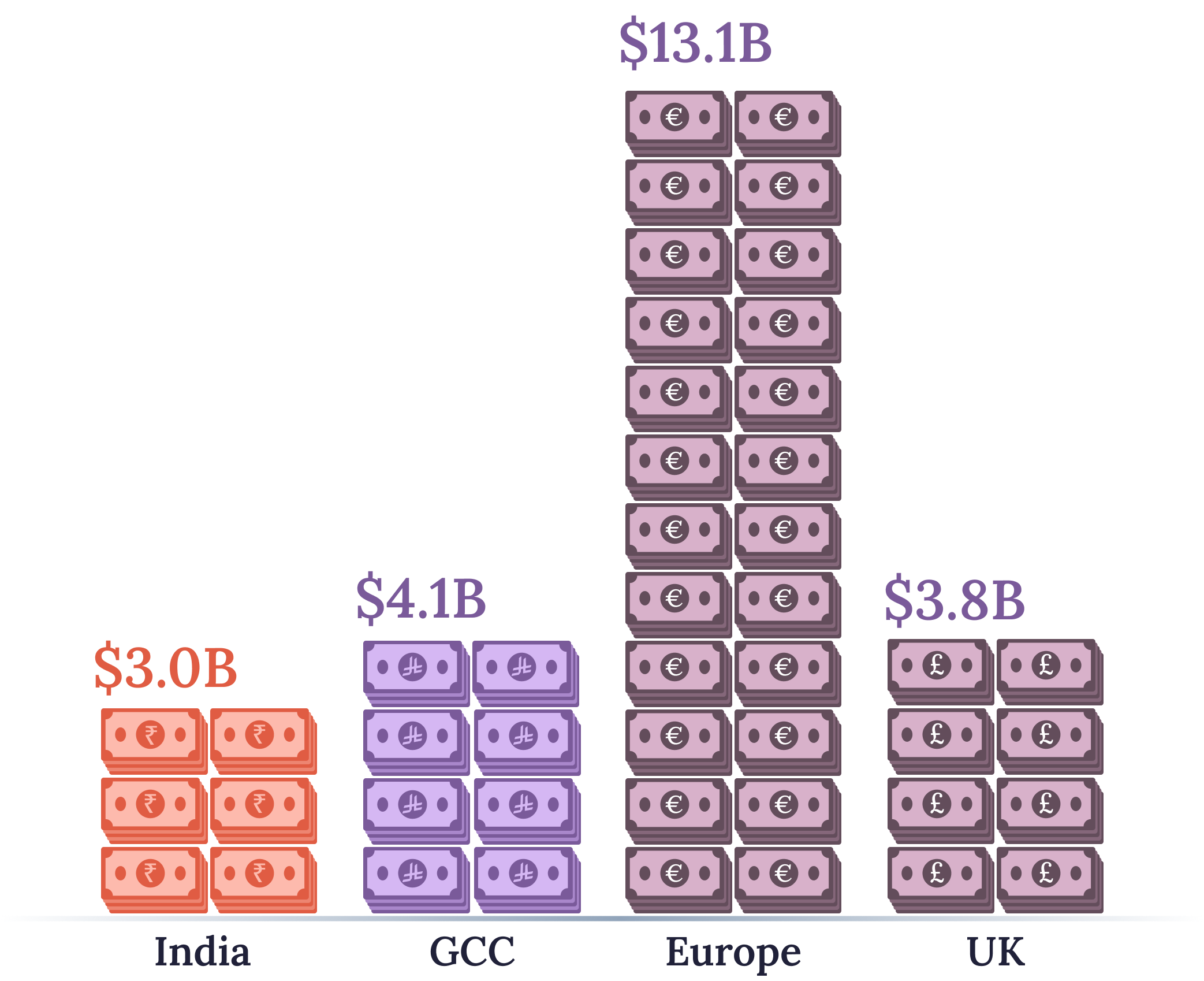
India’s startup ecosystem has created a strong pipeline of sponsor-backed companies increasingly adopting non-dilutive capital. Venture Debt supports early-to-growth stages, while Growth Credit is emerging at scale - funding expansion, acquisitions, and structured capital needs as companies move toward pre-IPO readiness.

$1.3B
Total VD Deal Value
$1.68B
Total GC Deals Value
187
Total VD Deals Count
32
Total GC Deals Count
Private Debt Sector-wise Split · VD
India Private Debt Sector-wise Split
"A capital-led ecosystem where structured credit plays an early, central role"

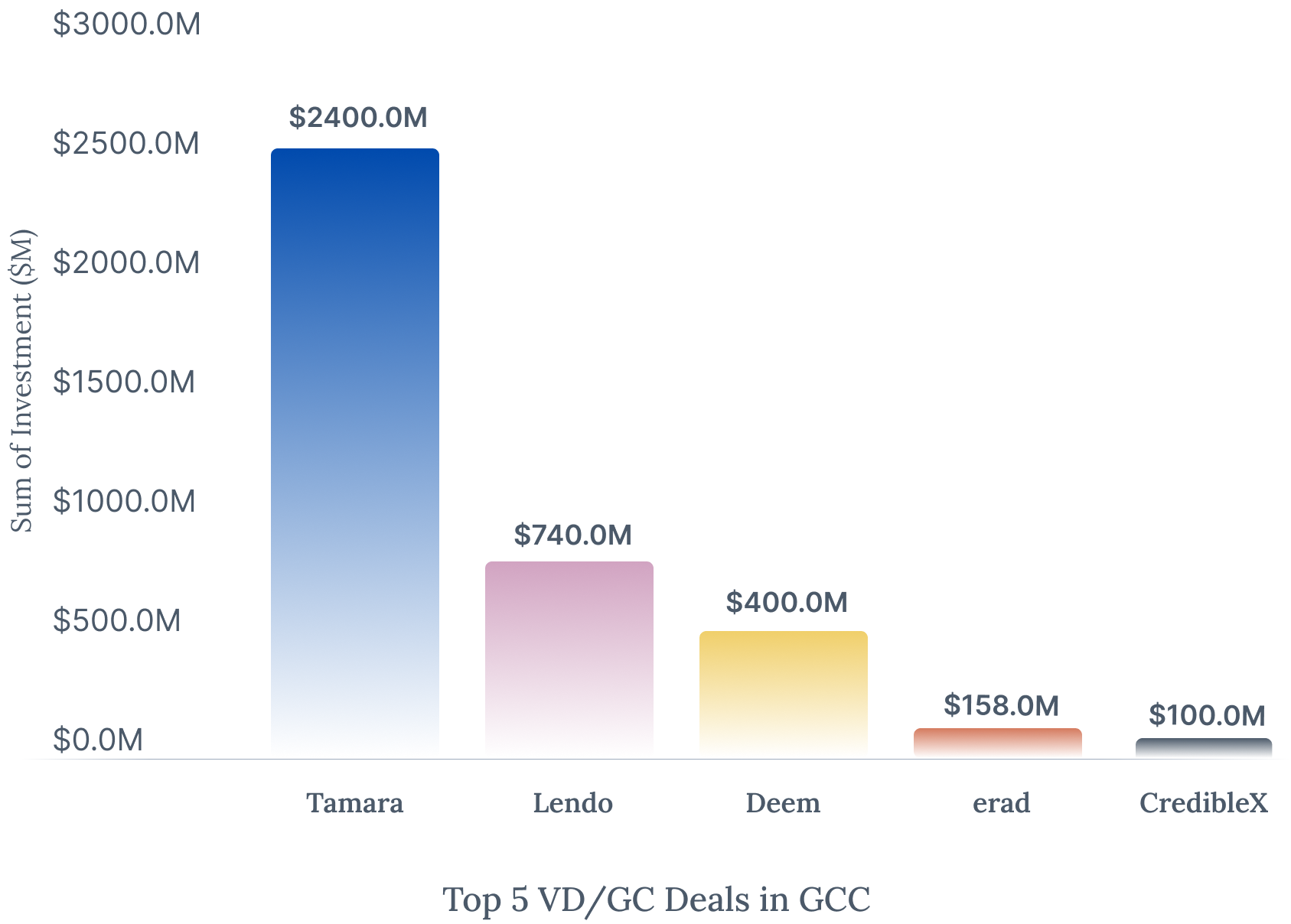
In the GCC, private debt is driven by sovereign capital and institutional participation, with fintech leading demand alongside other capital-intensive sectors. Growth Credit dominates through large, structured and asset-backed facilities, with credit deployed early to support scaling companies through flexible, non-dilutive funding.

$0.25B
Total VD Deal Value
$3.89B
Total GC Deals Value
15
Total VD Deals Count
10
Total GC Deals Count
Top 5 VD/GC Deals in GCC
GCC Private Debt Sector-wise Split
"A mature ecosystem where growth credit is central to scaling and capital structuring"

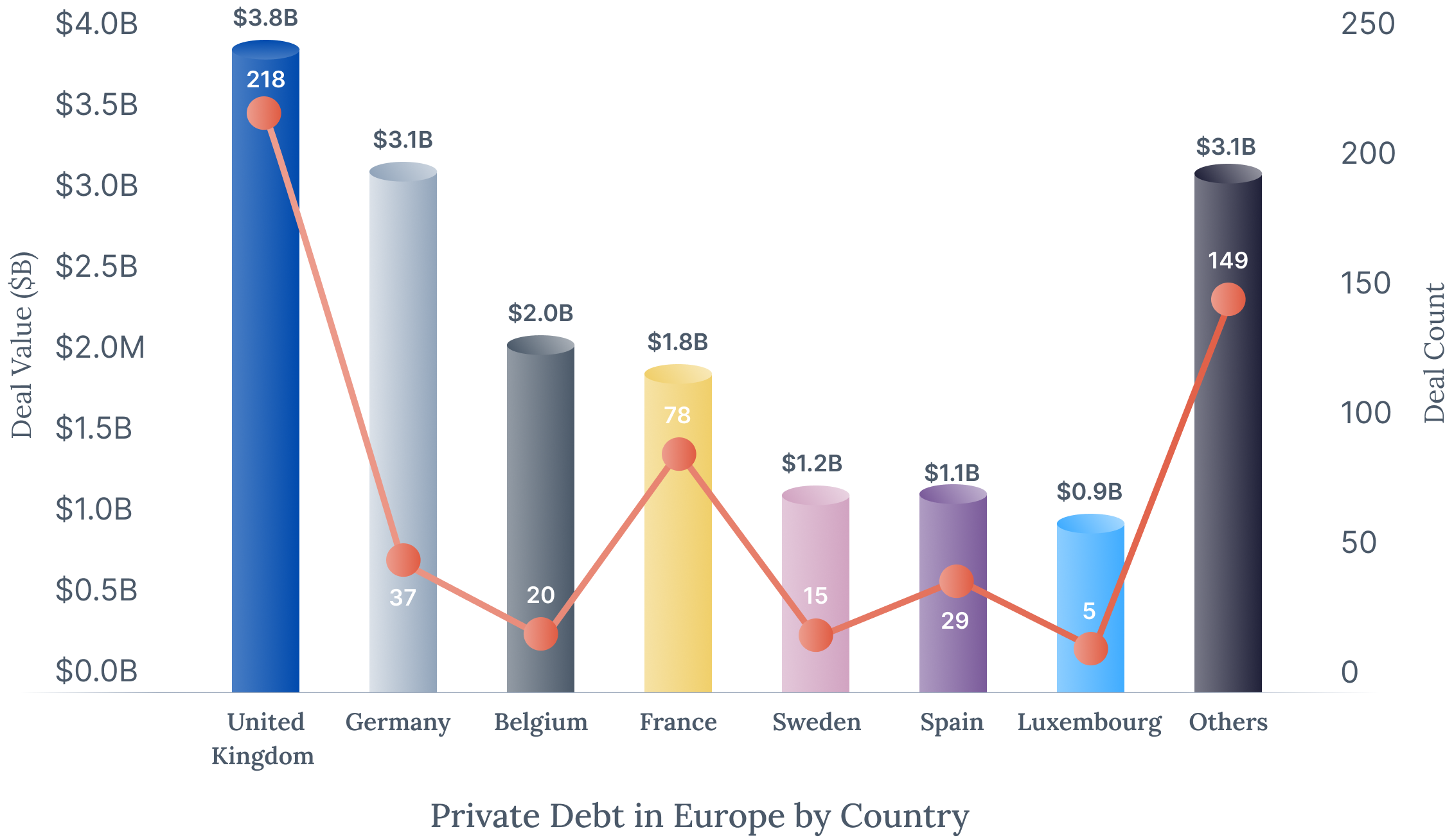
In the UK & Europe, Growth Credit is widely used by scaled, sponsor-backed companies for expansion, acquisitions, and capital structure optimisation, supported by deep institutional capital. Venture Debt plays a complementary role within an established and mature funding ecosystem.

$1.6B
Total VD Deal Value
$15.26B
Total GC Deals Value
429
Total VD Deals Count
122
Total GC Deals Count
Private Debt Sector-wise Split · UK & Europe
UK & Europe Private Debt Sector-wise Split
Global Private Debt Report · 2026

Read the
full report.

Stride Ventures · 2026
Global Private Debt Report 2026
A Venture Debt & Growth Credit Lens
View The Report